Certified: The CompTIA Linux+ Audio Course
By Jason Edwards
Listen to a podcast, please open Podcast Republic app. Available on Google Play Store and Apple App Store.
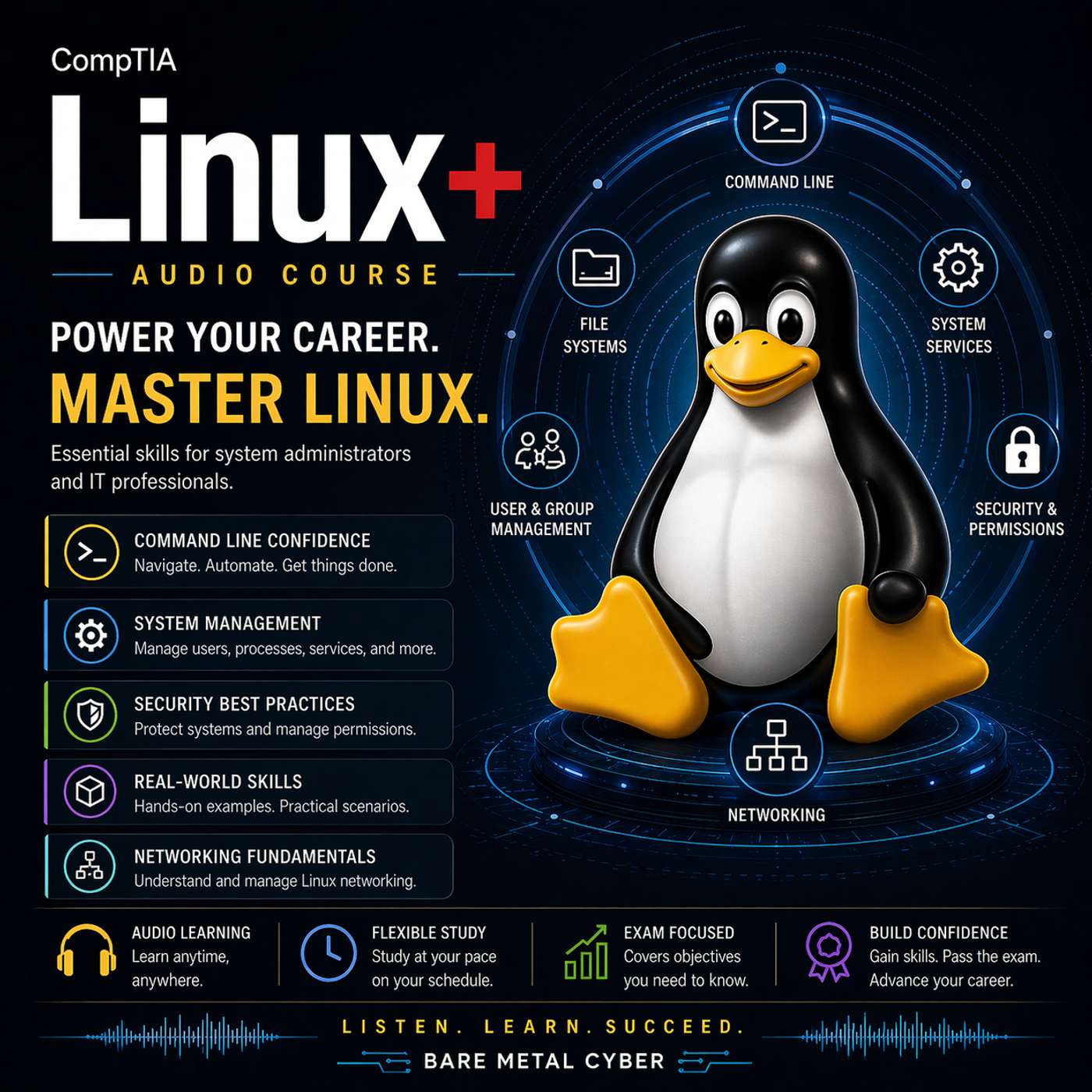
Image by Jason Edwards
Category: Technology
Open in Apple Podcasts
Open RSS feed
Open Website
Rate for this podcast
Subscribers: 1
Reviews: 0
Episodes: 106


Description
Linux+ for People With Jobs is a practical, audio-first course that teaches you to think and work like a real Linux administrator—without burying you in theory or trivia. You’ll learn the commands, concepts, and workflows the exam expects, but more importantly, you’ll build the habits that keep systems stable in production: verifying assumptions, making safe changes, and troubleshooting with a calm, repeatable process. Every episode is designed to help you study efficiently, retain what matters, and walk into the exam with confidence that actually transfers to the job.
| Episode | Date |
|---|---|
|
Welcome to the Linux+ Audio Course
|
Feb 07, 2026 |
|
Episode 105 — Memory pressure: swapping, OOM, killed processes, memory leaks
|
Feb 07, 2026 |
|
Episode 104 — CPU and load: high CPU, load average, context switching, slow startup
|
Feb 07, 2026 |
|
Episode 103 — Secure connectivity breakage: SSH, certs, repos, ciphers, negotiation issues
|
Feb 07, 2026 |
|
Episode 102 — Permission failures: ACLs, attributes, account access, why it used to work
|
Feb 07, 2026 |
|
Episode 101 — SELinux failures: policy vs context vs booleans, how to think, not panic
|
Feb 07, 2026 |
|
Episode 100 — Link problems: link down, negotiation failures, can’t ping server reasoning
|
Feb 07, 2026 |
|
Episode 99 — Interface issues: MTU mismatch, bonding, dual-stack surprises
|
Feb 07, 2026 |
|
Episode 98 — DHCP failures and IP conflicts: symptoms and best-next-step logic
|
Feb 07, 2026 |
|
Episode 97 — DNS vs routing vs firewall: fast isolation with minimal commands
|
Feb 07, 2026 |
|
Episode 96 — System and service failures: systemd unit failures, PATH misconfig, missing drivers
|
Feb 07, 2026 |
|
Episode 95 — Package and dependency breakage: what fails, what to check first
|
Feb 07, 2026 |
|
Episode 94 — Mount and write failures: won’t mount, read-only, partition not writable
|
Feb 07, 2026 |
|
Episode 93 — Disk full puzzles: filesystem full vs inode exhaustion vs runaway logs
|
Feb 07, 2026 |
|
Episode 92 — Corruption and weird crashes: kernel or data corruption, segmentation faults
|
Feb 07, 2026 |
|
Episode 91 — Boot failures: GRUB misconfig, kernel panic, and first-response triage
|
Feb 07, 2026 |
|
Episode 90 — Alerting design: thresholds, events, notifications, logging, aggregation patterns
|
Feb 07, 2026 |
|
Episode 89 — Data collection concepts: SNMP, traps, MIBs, agent vs agentless
|
Feb 07, 2026 |
|
Episode 88 — Monitoring language: SLA vs SLI vs SLO and what healthy means
|
Feb 07, 2026 |
|
Episode 87 — AI best practices for ops: safe use cases, verification, governance, prompt habits
|
Feb 07, 2026 |
|
Episode 86 — Recovery skills: reset vs stash, tags, safe undo thinking
|
Feb 07, 2026 |
|
Episode 85 — Branching and merging: merge vs rebase, squash, conflict mindset
|
Feb 07, 2026 |
|
Episode 84 — Daily Git workflow: init, clone, add, commit, log, diff, config, gitignore
|
Feb 07, 2026 |
|
Episode 83 — Python for admins: venvs, dependencies, modules, data types, PEP 8 awareness
|
Feb 07, 2026 |
|
Episode 82 — Return codes and arguments: $?, positional params, error handling patterns
|
Feb 07, 2026 |
|
Episode 81 — Functions and IFS/OFS: why scripts break on spaces and how to avoid it
|
Feb 07, 2026 |
|
Episode 80 — Loops: for, while, until with real admin-style use cases
|
Feb 07, 2026 |
|
Episode 79 — Conditionals: if, case, string vs numeric comparisons, common test flags
|
Feb 07, 2026 |
|
Episode 78 — Expansion and substitution: variables, quoting, subshells, command substitution
|
Feb 07, 2026 |
|
Episode 77 — Bash script structure: shebang, execution, safety defaults, readability
|
Feb 07, 2026 |
|
Episode 76 — Orchestration overview: Kubernetes objects plus Swarm and Compose mental models
|
Feb 07, 2026 |
|
Episode 75 — CI/CD and GitOps: pipelines, shift-left testing, DevSecOps vocabulary
|
Feb 07, 2026 |
|
Episode 74 — OpenTofu and Terraform concepts: providers, resources, state, drift, APIs
|
Feb 07, 2026 |
|
Episode 73 — Puppet at exam depth: classes, modules, facts, certificates, agent vs agentless
|
Feb 07, 2026 |
|
Episode 72 — Ansible at exam depth: inventories, playbooks, modules, ad hoc, facts, agentless
|
Feb 07, 2026 |
|
Episode 71 — IaC overview: what problems it solves and how exams describe it
|
Feb 07, 2026 |
|
Episode 70 — Integrity and destruction: AIDE, rkhunter, verification, secure erase, supply chain, banners
|
Feb 07, 2026 |
|
Episode 69 — Vulnerability and standards thinking: CVE/CVSS, OpenSCAP, CIS Benchmarks
|
Feb 07, 2026 |
|
Episode 68 — Data in transit and certs: TLS stacks, WireGuard basics, hashing, weak algorithms
|
Feb 07, 2026 |
|
Episode 67 — Data at rest: GPG vs LUKS2, keys, and what good enough means
|
Feb 07, 2026 |
|
Episode 66 — Safer accounts: restricted shells, avoiding root habits, practical guardrails
|
Feb 07, 2026 |
|
Episode 65 — Password policies and lockouts: complexity, history, pam_tally2 concepts
|
Feb 07, 2026 |
|
Episode 64 — SELinux and secure access: contexts, booleans, plus SSHD hardening and fail2ban themes
|
Feb 07, 2026 |
|
Episode 63 — Permissions and control: chmod, chown, special bits, umask, ACLs, file attributes
|
Feb 07, 2026 |
|
Episode 62 — Sudo and privilege: sudoers structure, safe delegation, common misconfig patterns
|
Feb 07, 2026 |
|
Episode 61 — NAT and forwarding: DNAT, SNAT, PAT, ip_forward, troubleshooting frames
|
Feb 07, 2026 |
|
Episode 60 — Netfilter concepts: iptables, nftables, ipset, stateful thinking, rule intent
|
Feb 07, 2026 |
|
Episode 59 — Logging pipeline: journald, rsyslog, logrotate, how logs stay useful
|
Feb 07, 2026 |
|
Episode 58 — Audit basics: what auditd is for, and what audit rules capture
|
Feb 07, 2026 |
|
Episode 57 — ufw approach: rule intent, common mistakes, and why it blocks traffic
|
Feb 07, 2026 |
|
Episode 56 — firewalld mental model: zones, services vs ports, runtime vs permanent
|
Feb 07, 2026 |
|
Episode 55 — Directory-backed auth: LDAP vs Kerberos vs Samba, in exam language
|
Feb 07, 2026 |
|
Episode 54 — Identity integration concepts: SSSD, Winbind, realm basics, and where they fit
|
Feb 07, 2026 |
|
Episode 53 — Linux auth story: PAM, polkit, and what controls what
|
Feb 07, 2026 |
|
Episode 52 — Container networking: port mapping, network types, privileged vs unprivileged tradeoffs
|
Feb 07, 2026 |
|
Episode 51 — Volumes and storage: persistence, mapping, overlay concepts, SELinux context awareness
|
Feb 07, 2026 |
|
Episode 50 — Running containers: env vars, logs, exec, inspect, and what each is for
|
Feb 07, 2026 |
|
Episode 49 — Image operations: pull, build, tag, layers, and Dockerfile directive behavior
|
Feb 07, 2026 |
|
Episode 48 — Container fundamentals: runtimes and the image/container boundary
|
Feb 07, 2026 |
|
Episode 47 — systemctl troubleshooting mindset: status, logs, daemon-reload, enable, mask patterns
|
Feb 07, 2026 |
|
Episode 46 — systemd units and targets: services, timers, mounts, targets, dependencies
|
Feb 07, 2026 |
|
Episode 45 — Basic service configs at exam level: DNS, NTP, DHCP, HTTP, mail, what breaks
|
Feb 07, 2026 |
|
Episode 44 — Language ecosystems: pip vs cargo vs npm, and how they fail differently
|
Feb 07, 2026 |
|
Episode 43 — Repositories and trust: enabling/disabling, third-party risk, signatures, exclusions
|
Feb 07, 2026 |
|
Episode 42 — Packages vs source: dependencies, conflicts, and clean rollback thinking
|
Feb 07, 2026 |
|
Episode 41 — Scheduling: cron vs anacron vs at, and choosing the right one
|
Feb 07, 2026 |
|
Episode 40 — Signals and job control: stop, continue, kill, foreground/background decisions
|
Feb 07, 2026 |
|
Episode 39 — Reading process reality: ps/top/htop/proc and what to look for first
|
Feb 07, 2026 |
|
Episode 38 — Password aging and lockouts: expiration, chage concepts, and common gotchas
|
Feb 07, 2026 |
|
Episode 37 — Account lifecycle: add, modify, delete, shells, and least-privilege habits
|
Feb 07, 2026 |
|
Episode 36 — Users, groups, and identity: UID, GID, EUID, EGID explained simply
|
Feb 07, 2026 |
|
Episode 35 — Links and metadata: hard vs symbolic, stat thinking, and why it matters
|
Feb 07, 2026 |
|
Episode 34 — Finding things fast: locate vs find, and which tool fits decisions
|
Feb 07, 2026 |
|
Episode 33 — File operations you’re tested on: create, move, copy, remove safely
|
Feb 07, 2026 |
|
Episode 32 — libvirt and virsh mental model: what these tools manage and how questions frame them
|
Feb 07, 2026 |
|
Episode 31 — VM storage and lifecycle: images, snapshots, migrations, and network modes
|
Feb 07, 2026 |
|
Episode 30 — Virtualization basics: KVM/QEMU, VirtIO, and where performance comes from
|
Feb 07, 2026 |
|
Episode 29 — Backups without labs: archive vs sync vs image, restore validation thinking
|
Feb 07, 2026 |
|
Episode 28 — Text processing decision drill: grep, awk, sed, sort, uniq, cut, xargs in context
|
Feb 07, 2026 |
|
Episode 27 — Redirection and pipes: how data flows through stdin, stdout, stderr
|
Feb 07, 2026 |
|
Episode 26 — Shell environment essentials: PATH, HOME, PS1, and startup files
|
Feb 07, 2026 |
|
Episode 25 — Interface configuration concepts: NetworkManager vs Netplan, what changes where
|
Feb 07, 2026 |
|
Episode 24 — Network tools by intent: test connectivity, inspect sockets, capture packets
|
Feb 07, 2026 |
|
Episode 23 — Name resolution internals: hosts, resolv.conf, nsswitch.conf, failure modes
|
Feb 07, 2026 |
|
Episode 22 — Network troubleshooting workflow: link → IP → route → DNS → service bind
|
Feb 07, 2026 |
|
Episode 21 — Capacity vs inodes: disk full when it isn’t, and the mental checklist
|
Feb 07, 2026 |
|
Episode 20 — Network mounts overview: NFS vs SMB/Samba and what symptoms look like
|
Feb 07, 2026 |
|
Episode 19 — Mount options that matter: security and stability tradeoffs
|
Feb 07, 2026 |
|
Episode 18 — Mounting mastery: fstab, transient mounts, and avoiding boot-time surprises
|
Feb 07, 2026 |
|
Episode 17 — RAID basics for Linux+: what it protects, what it doesn’t, status thinking
|
Feb 07, 2026 |
|
Episode 16 — LVM part 2: grow, extend, resize safely, and common failure patterns
|
Feb 07, 2026 |
|
Episode 15 — LVM part 1: PV, VG, LV concepts and why LVM exists
|
Feb 07, 2026 |
|
Episode 14 — Filesystems in practice: ext4 vs xfs vs btrfs vs tmpfs, when and why
|
Feb 07, 2026 |
|
Episode 13 — Partitioning decisions: MBR vs GPT, growth, identifiers, verification
|
Feb 07, 2026 |
|
Episode 12 — Storage mental model: block devices → partitions → filesystem → mount
|
Feb 07, 2026 |
|
Episode 11 — initrd tools and custom hardware contexts: embedded and GPU use cases
|
Feb 07, 2026 |
|
Episode 10 — Hardware discovery mindset: CPU, memory, devices, and what looks wrong
|
Feb 07, 2026 |
|
Episode 9 — Kernel modules: what they are, when they load, how to reason about them
|
Feb 07, 2026 |
|
Episode 8 — Architectures and GUI stack: x86_64 vs AArch64, X vs Wayland, licensing basics
|
Feb 07, 2026 |
|
Episode 7 — Distros and packages: RPM-based vs dpkg-based thinking
|
Feb 07, 2026 |
|
Episode 6 — FHS tour: why where things live matters on exam questions
|
Feb 07, 2026 |
|
Episode 5 — PXE boot in plain English: where it fits and what can fail
|
Feb 07, 2026 |
|
Episode 4 — Boot configs and kernel parameters: what they change and why it breaks
|
Feb 07, 2026 |
|
Episode 3 — Boot flow story: bootloader → kernel → initrd/initramfs → userspace
|
Feb 07, 2026 |
|
Episode 2 — Audio-only study method: recall loops, pause-and-answer drills, exam-day mindset
|
Feb 07, 2026 |
|
Episode 1 — How Linux+ (XK0-006) tests you: domains, PBQs, pacing
|
Feb 07, 2026 |